- Τηλεφωνικό Κέντρο: +30 2109649420
- Κινητό: +30 6974234231

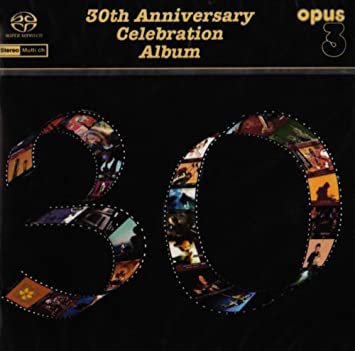
SACD22060 30th Anniversary Celebration Album SACD / Hybrid /Multi channel
27 Δεκεμβρίου, 2020
SACD 19911 Benny Waters Live at The Pawnshop SACD / Hybrid
27 Δεκεμβρίου, 2020
SACD 22063 Maria Winther Dreamsville SACD / Hybrid. Multi Channel.
25,00€

SACD 22063 Maria Winther Dreamsville SACD / Hybrid. Multi Channel.
We are pleased to present a newcomer to the Swedish jazz scene, vocalist Maria Winther.
Accompanied by a band of the elite of the Swedish jazz world with
Gösta Rundqvist as pianist and producer
Joakim Milder on tenor sax
Christian Spering on double bass and
Ola Hultgren on drums we are treated to Maria’s favourites from an early age from the American Song Book ‘
| 1. Dreamsville (R. Evans – J. Livingston – H. Mancini) |
5´47  |
06. You Must Beleive In Spring (M. Bergman – M. Legrand) |
4´39 |
| 02. April in Paris (E.Y. Harburg – V.Duke) |
4´09 | 07. Love is a Many Splendoured Thing (S. Fain – P. Webster) |
4´45 |
| 03. A Foggy Day In London Town (G & I Gershwin) |
6´17 |
08. At Last (M. Gordon – P. Webster) |
5´39 |
| 04. A Flower Is A Lovesome Thing (B. Strayhorn) |
3´22 | 09. For Heavens’ Sake (D. Meyer – E. Bretton – S. Edwards) |
4 49 |
| 05. I’ve Grown Accustomed To His Face (A. Lerner – F. Loewe) |
6´16 |
10. We’ll be Together Again F. Laine – C. Fisher) |
5´50 |
s the ‘American Songbook’.c the ‘American Songbook’.ene, vocalist Maria Winther.Discussions of sound nowadays tend to be very much preoccupied with the digital links of the sound reproduction chain, especially where gramophone recordings are concerned. Attention very often focuses exclusively on the type
of A/D converter used, how many bits, the amount of oversampling, how the equipment is specially modified, and so on and so forth.
When Opus 3 started at the end of 1976, there was far more talk about the way in which the actual recording was done purely in terms of recording technique or philosophy – that is, the methodology employed (multi- mike versus twin microphone technique etc.) and the type of recording situation chosen – natural environments or traditional studio technique, and so on.
Whatever the technical apparatus, it is still the actual, recording philosophy that does most to decide what a recording will sound like – a fact which has been virtually lost sight of in the discussion of sound today. The quantity of electronics used in a recording is also highly important. In the type of mixer consoles commonly used in a studio nowadays, the acoustic signal passes through a very large number of amplifier stages – between thirty and forty or more is not unusual! The Opus 3 electronics, which are mainly tube-equipped and which we have partly developed ourselves, seldom include more than three of four amplifier stages between microphone and storage medium.
Opus 3’s recording technique has been specially developed for acoustic music and is based on using the natural acoustics of authentic environments such as churches, concert halls, jazz clubs and so on. We match the venue to the music, so to speak, as opposed to the common studio practice of adding an artificial reverberation afterwards and so on. The positioning of the microphone in the recording room and the positioning of the musicians in relation to the microphone are also extremely important.
From the very outset we have used what is known as the coincident or X/Y recording technique, mainly employing the special configuration of crossed figure of eights, also known as the Blumlein technique, after Alan Dower Blumlein, the British radar engineer who developed the technique way back in 1934.
Depth of Image
So accustomed are we to three-dimensional vision, that we never really think about it. But we need only shut one eye for our judgment of distances to be reduced and our three-dimensional vision to disappear: we need both eyes and the relation between them in order for see three-dimensionally. Much the same is true of our hearing.
Our brain and auditory system “process” the sound-waves reaching each ear, with regard to level, direction, time and frequency content. The signal is further “analyzed” by our brain and auditory system, and the differences between signals coming from our two ears tell us, for example, about distance to the different sound sources and their relative positions. We experience “Depth of Image”: for example, the different instruments of the orchestra in a concert hall are differently placed, not only from left to right but also in depth, together with the size and acoustics of the concert hall.
By “collecting” the total sound at one single point with a stereo microphone -that is,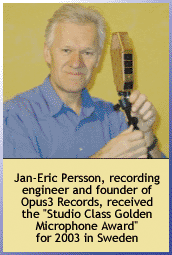 a microphone with its capsules as close together as possible -we obtain a strict relation between the direct sound and the reflected sound (the diffused sound field), and this gives our brain and auditory system important information for building up an illusion of “reality” – the concert hall, the church or the jazz club. It is also very important for the direct and the reflected sound to have an exact acoustic connection with the sound-waves from each instrument. In traditional recording studios, there is, basically, one microphone (or sometimes even more) per instrument, and these are then mixed together electrically. This is not real stereo, it is just panned mono.
Since, moreover, the microphones are usually placed veryclose to each instrument in an acoustically dead studio, all one gets is the direct sound of the instrument, and so artificial reverberation has to be “added on” electrically afterwards.
Timbre
By timbre we mean the specific character of an acoustic musical instrument – meaning, for example, what makes it possible for us to tell one instrument from another. The timbre of a musical instrument is a combination of its significant spectral distribution, i.e. the relation between notes and their harmonics and each relative level and frequency distribution, and last but not least, the way in which the sound-waves radiate from the body of the instrument.
All our acoustic instruments are designed to be played in some form of concert hall, i.e. in a place where you hear both the direct sound of the instrument and the reverberation of the environment. If, like Opus 3, you are aiming for as natural an instrumental timbre as possible, it is vitally important that acoustic instruments can also be recorded in the type of surroundings they were originally designed to be played in, but also with longer microphone distances, so as also to capture the sound radiating from the whole sounding body of the instrument. The short microphone distances normally used also make the timbre unnatural, and so it has to be “restored” artificially, using various equalizers etc. We mustn’t forget that when our acoustic musical instruments were created, a long time ago, neither electricity, microphones or recording studios existed !
Dynamics
The dynamic range of a musical instrument is the difference between the loudest and the softest sound level it is capable of producing. Like timbre, the dynamics of a musical instrument depend, not only on how it is built but also on how it is used by the composer and performer. Dynamics in this sense are used to create a large number and variety of musical effects, changes of emotion, mood and expression etc., etc. The dynamic properties of a musical instrument are also very much affected by the way in which it is recorded. The short microphone distances used for multi-microphone recording in traditional studios also exaggerate the recorded dynamics. Just like timbre, the dynamic balance then has to be artificially “restored”, using compressors, limiters and so on.
| Surround Sound on Opus 3 | |
| – Acoustic music in authentic environments! | |
| First it was Mono, and then came Stereo and now finally we have Surround Sound!We at Opus 3 Records greeted the development of Surround Sound as an acknowledgement of the rightness of our original aims and ambitions since our inception in 1976…“To transfer and recreate the feeling and atmosphere that we felt at the moment of recording”.
And when DSD (Direct Stream Digital) and SACD came along, we also found the perfect recording and storage medium for surround sound! Since we invariably record in the venue where the performance is taking place we automatically capture and retain the authentic atmosphere and feeling at the moment of recording as opposed to most studio recordings which require the addition of sophisticated (though often very good) effects, such as reverb, echo etc to achieve this. These synthetic effects may be very good for some purposes, but they are not authentic. It’s a question of feeling, very difficult to describe in words, rather like trying to describe a Stradivarius compared to another very good violin. The word HiFi can be interpreted in many different ways. We at Opus 3 Records have always considered it to be the natural sound of reality, with good Depth of Image, Timbre and Dynamics – or as the world renowned HiFi manufacturer Quad put it:
|
“The closest approach to the original sound”.With Stereo reproduction you are looking into the place where the musicians are playing, but with Surround Sound, if your system is correctly set up, you can be there with them. However this can be carried out in many different ways, depending on what “acoustic information” you want to transfer to the listener. You can be with the orchestra or seated in the audience, the choice is made at the time of recording.
Normally we at Opus 3 would not want, for example, to put the listener in the middle of the orchestra where the human psyche in the form of ear-brain relationships resents sharp sounds behind the head. Ideally our main aim is to imbue to the listener the feeling that he or she is there, in the same room as the musicians, whether it be a Concert hall, Church, or your favourite seat (near the bar) in your Blues or Jazz club. Again this atmosphere or feeling of the venue is an integral part of the recording, each one is different, but never the less it is there and captured on Opus 3 recordings. This is our main priority to capture the performance with the ambience and acoustics of the venue at the moment of recording. All you have to do is close your eyes and let the walls of the listening room disappear while you are transported to your own personal heaven. (No cover charge or waiting at the door) |
Accompanied by a band of the elite of the Swedish jazz world with
Gösta Rundqvist as pianist and producer
Joakim Milder on tenor sax
Christian Spering on double bass and
Ola Hultgren on drums we are treated to Maria’s favourites from an early age the ‘American Songbook’.
| Weight | ,200 kg |
|---|
Εταιρία
Opus3 Records


