- Τηλεφωνικό Κέντρο: +30 2109649420
- Κινητό: +30 6974234231

ALIANTE NOVA ΕΚΘΕΣΙΑΚΟ ΤΙΜΗ ΖΕΥΓΟΣ.
28 Δεκεμβρίου, 2020
AURUM MEGAN VIII demo pair
28 Δεκεμβρίου, 2020
CATERHAM 7 MK II.
720,00€

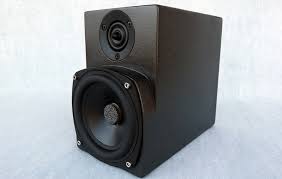
CATERHAM 7 MK II.
Project Seven
Dick Sequerra’s Met 7 is unquestionably one of the milestones of mini speakers. Conceptually it is the opposite of LS3 / 5a, and is like Mr. Hyde to Dr. Jekyl.
Dick Sequerra, known for his tuners Marantz 10 and Sequerra Model 1, began his electroacoustic adventure at the end of the 70s, founding Pyramid Loudspeaker Co. The first model is the Metronome One (the names Pyramid and Metronome refer to the shape pyramidal and / or metronome of the first models), a 4-way with 15 “woofer, a 6.5” mid-bass, a 4.5 “mid-high and a 2” cone tweeter, all 90 cm high , with a base 65X39 cm. The second model, from 1977, is the Two + 2W, an “Aztec” pyramid with a lower module (2W, 70X43X63 cm) with a 12 “woofer and an upper 3-way pyramid, independent if desired (Model Two: woofer 8” , 4.5 “midrange and 2” cone tweeter, 31X20X45 cm). The Model Two + 2W is completed by the fabulous T1 ribbon tweeter in ’78, a tweeter so special that it replaces the Decca Ribbon in Mark Levinson’s latest HQD systems, making it HQS. T1 being very expensive, Dick developed the HF1 ribbon tweeter to meet the demand of many audiophiles, one of the very popular systems of the time was the HF1 + Dahlquist DQ10 + Janis subwoofer system.
In fact, the HF1 cabinet is the “egg” from which the Met 7 is born … In fact, Dick Sequerra, I recycle the cabinet of this ribbon tweeter, to create an economical speaker, the Met 7 (5 “woofer and the usual 2 “tweeter), which far surpasses the previous Pyramid models in fame. From the Met 7 comes the modular “Futuresonics” system which completes the Met 7 at the bottom and top with the Met 8W subwoofer (12 ”woofer) and the Met 9 supertweeter (front / rear double ribbon) or HF1. The Futuresonics system, in its late ’70s version delights many audiophiles in Italy too, and the Met 7 of that era, used alone, has quality well above its price and those who own a couple rarely separates … ..
The “golden age” is almost always followed by dark times in the subsequent history of the Met 7. The Met 7 MkII, 6.5 “woofer and 2” “hollowed” tweeter, has never really convinced the lovers of the “real” Met 7. Similarly the Futuresonics MkII was questionable (Met 8 MkII woofer, Met 9 MkII horizontal ribbon tweeter and Met 10 line source).
Dick responded to the criticism with the “Signature Model One System”, a $ 28,000 Futuresonics. The midrange module (= Met 7 MkII) loses the cavern around the tweeter and buys a Corian cabinet, the tweeter module becomes again a T1 + Met10-4 etc …. Obviously, such a system was not within everyone’s reach and was derived from it the nearfield monitor NFM-1 (the central module of the Signature Model One, but with an MDF cabinet instead of the expensive Corian) for 1500 dollars.
With the 7.7 MkI model a “comme-il-faut” Met 7, 5 “woofer and” real “Met 7 size is born again, this is perhaps the best Met 7 ever made, very rare and very inexpensive (800 USD) . MkII and MkIII versions follow, again with a 5 “woofer, which are also” comme-il-faut “, but these further versions are imposed by supply problems of the 7.7 MkI’s 5” woofers, rather than real ones. improvements.
Unfortunately with the 7.7 MkIV we return to a 6.5 “woofer and to more important dimensions and in fact we can rather speak of a revised NFM-1, the same for the Met 7.7MkV …
The Metronome 20 opens a new chapter of its own, and marks the return to the pre-Met 7 pyramid shape at a much less popular price (5,000 USD).
What makes the Met 7 such a special object?
Sequerra’s electroacoustic philosophy puts the emphasis on the correct temporal behavior of its speakers, with a lot of attention to diffraction phenomena (hence the pyramid shape of the origins).
In the case of the Met 7, the front is limited to the dimensions that allow the footprint literally “to the hair” of the 5 “woofer and the 2” tweeter, with a “step” power factor correction of the woofer. These truly minimum dimensions of 13.5X19.5X23 cm make falling in love immediately… ..
The filtering is strictly of the first order “minimum phase”, to respect the waveform of the musical signal to the maximum.
It should be noted that Sequerra exclusively uses cone tweeters (apart of course the ribbons), claiming their superiority relative to the classic “domes”. It is very difficult to blame him, given the advantages in terms of dispersion control as a function of diffraction thanks to the typical behavior of the cones that concentrate the radiation, as the frequency increases, in the center of the cone, instead of in the periphery. (the cones are distinguished by a very low listening effort).
The Caterham Acoustics Seven slavishly takes up the ingredients of the original Met 7 with only an update of the components (the drivers are direct descendants of the original ones) with slight improvements in the quality of the wiring and capacitors. The cabinet is in MDF instead of the very cheap chipboard of the origins, finished in scratch-resistant Vesmaflex. The power indicator LED system has been eliminated for sound reasons. It is an absolutely no-compromise product, despite the low price. It is a no-marketing product (a cone tweeter in the 21st century?) And also a no-design product (small yes, but beautiful?). Like an automobile Caterham Seven, it has only one goal, to give “racing” listening pleasure, like the driving pleasure of its namesake.
The Caterham Acoustics Seven will make the small, inexpensive audiophile integrateds thrive like no other speaker in its price range, gracefully handling the coloration and limitations of such electronics. There are no upward limits either to transistors or tubes (except for attention not to have excessive power). Obviously it can be completed with a supertweeter and an “ad-hoc” subwoofer.
| Weight | 35 kg |
|---|
Εταιρία
Aliante